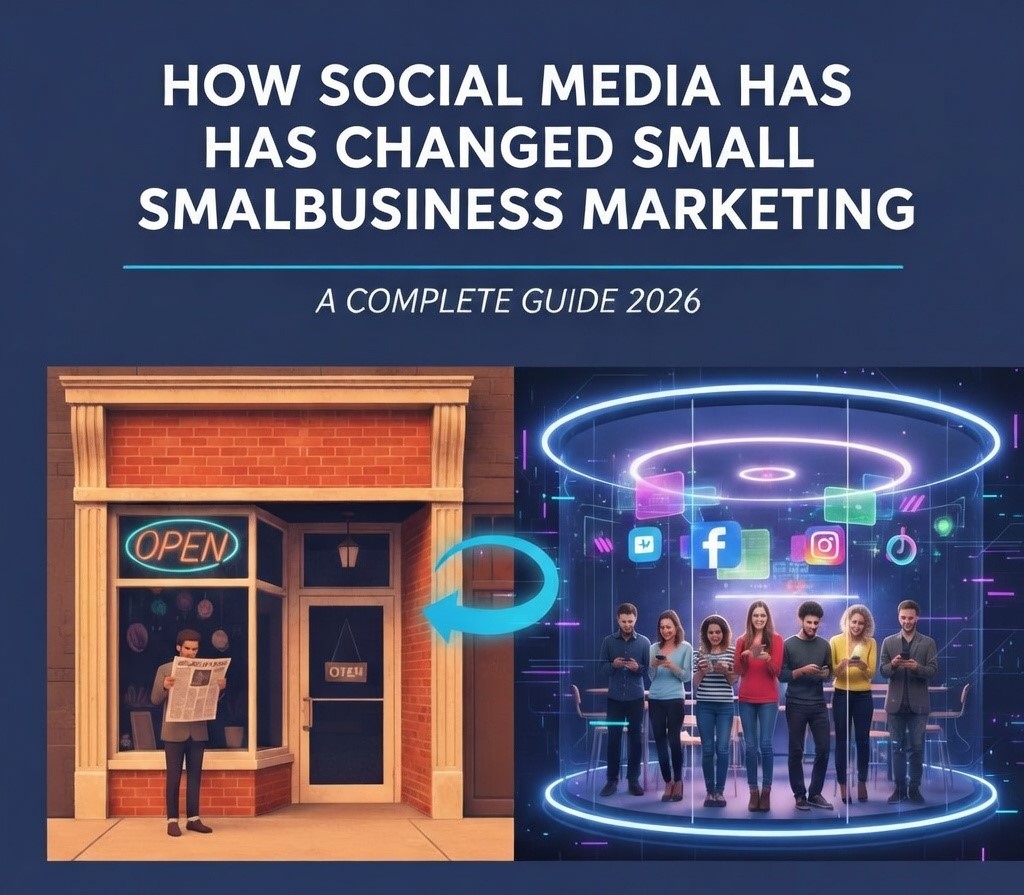
How Social Media Has Changed Small Business Marketing: A Complete Guide 2026
Social media has fundamentally revolutionized the way small businesses connect with customers, build brands, and increase sales. What once required hefty advertising budgets is now accessible to entrepreneurs working from their living rooms. Let's understand this change in detail.

Democratization of Marketing: Equal Opportunity for All
Before social media, small businesses faced significant obstacles in reaching their customers. Television commercials, radio spots, and print ads required budgets that most small businesses could not afford. A local bakery competing with national chains had almost no way to tell its story beyond its immediate area.
Social media changed everything overnight. Platforms like Facebook, Instagram, TikTok, and LinkedIn provided small businesses with the same tools that Fortune 500 companies use. Bakery owners can now share behind-the-scenes videos of fresh bread making, post customer testimonials, and reach thousands of potential customers without spending a fortune.
This democratization means that creativity and authenticity often matter more than budget size. A great Instagram Reel or TikTok video can reach millions of people naturally, whereas traditional advertising used to cost millions of dollars. Small businesses with compelling stories, unique products, or exceptional customer service can now compete directly with larger competitors based on the quality of their content rather than the quantity of their resources.
How has social media changed the way small businesses communicate with customers?
Social media has transformed customer relationships from transactional to conversational. Small businesses can now communicate with their customers in real time, building relationships that foster loyalty and trust.
When a customer comments on a post, asks a question in a direct message, or tags a business in their story, small business owners can respond instantly. This instant response creates a sense of intimacy and accessibility that large corporations find difficult to match. Customers feel heard, valued, and connected to the brand on a personal level.
This two-way communication also provides invaluable feedback. Small business owners can assess customer reactions to new products, understand their problems, and adapt their products and services based on real-time feedback. A clothing store might post two design options and let its followers vote on which design to create. A restaurant might ask customers which dishes they want to see on the next seasonal menu.
These interactions build not just a customer base, but also a community. Followers become brand advocates who share posts, defend the business in comments, and generate publicity that money can't buy. This relationship goes beyond transaction and creates a genuine emotional connection.
Why is social media advertising more cost-effective than traditional advertising for small businesses?
Traditional advertising was based on an uncertain model. You would place an ad on a billboard or in the newspaper and hope the right people would see it. Social media advertising has completely changed this, giving small businesses unprecedented precision at affordable prices.
Platforms like Facebook and Instagram allow businesses to target users based on demographics, interests, behavior, location, and even life events. A local yoga studio can target women aged 25-45 within a five-mile radius who have expressed an interest in health, meditation, and fitness. A B2B software company can target decision-makers at specific-sized companies in specific industries.
This precision means that every dollar spent on advertising is more effective. Small businesses can start with a low budget of five or ten dollars per day and increase it as they see results. They can A/B test different ad creatives, audiences, and messages to continuously optimize performance.
What kind of data can small businesses gain through social media advertising?
The analytics provided by social platforms are incredibly detailed. Small business owners can see how many people saw their ad, how many clicked, what actions they took, and how much it cost to acquire each customer. This data-driven approach allows for continuous improvement and refinement, ensuring that marketing budgets are being used efficiently.
Retargeting capabilities add another powerful dimension. When someone visits a small business's website but doesn't make a purchase, social media ads can follow them across platforms, reminding them of the products they viewed and encouraging them to complete a purchase. This helps businesses stay in customers' minds without being intrusive.
What type of content should small businesses share on social media?
Social media has made content marketing an essential strategy for small businesses. While it used to be a nice-to-have, it's no longer. Instead of constantly promoting sales messages, businesses can provide value by showcasing educational content, entertainment, inspiration, and behind-the-scenes glimpses that humanize their brand.
A small accounting firm can share tax tips, financial planning advice, and explanations of complex regulations to help their audience make better decisions. A pet supply store can post training videos, nutritional information, and heartwarming photos of customers' pets. This content establishes the business as an expert in its field and builds trust and goodwill.
The storytelling aspect is especially powerful for small businesses. Customers want to know the reason behind a business, the founder's journey, the company's mission, and the values that guide decision-making. Social media provides an ideal platform for sharing these stories through posts, videos, and stories.
How can small businesses leverage user-generated content?
User-generated content has become a crucial part of social media marketing. When customers share photos using a product, post reviews, or create content related to a business, it acts as authentic testimonials that are far more impactful than traditional advertising. Smart small businesses encourage this by creating branded hashtags, running contests, and featuring customer content on their profiles.
Visual platforms like Instagram and Pinterest have made it easier than ever for small businesses to showcase products in a lifestyle context. A furniture maker can display their pieces in beautifully designed rooms. A food product company can share recipe ideas and food presentations. This aspirational content helps customers envision the product in their own lives.
What are the advantages of working with micro-influencers compared to celebrities?
The best thing about these partnerships for small businesses is the flexibility. Payment can include free products, small fees, commission-based arrangements, or a combination of these. This makes influencer marketing accessible even for businesses with very limited marketing budgets.
Many small businesses have also turned their employees, founders, and loyal customers into brand ambassadors who share authentic content about the business. This grassroots approach to influencer marketing fosters genuine advocacy that resonates with audiences who are tired of overly polished corporate messaging.
How should small businesses handle customer service on social media?
Social media has transformed customer service from a back-office function into a public performance that can make or break a small business's reputation. Customers now expect to reach businesses through social channels, ask questions, resolve issues, and receive quick responses.
This public nature of social customer service works both ways. If handled well, it demonstrates responsiveness and care to all followers. A small business that quickly resolves a customer complaint on Twitter or Facebook shows potential customers that they stand behind their products and value satisfaction.
However, negative reviews and complaints also spread faster than ever before. A single unhappy customer can share their experience with thousands of people. Smart small businesses constantly monitor their social channels, respond to criticism professionally, and work to turn negative experiences into positive outcomes.
Why are online reviews and ratings so important for small businesses?
Integrated review and rating systems on platforms like Facebook and Google My Business have become crucial signals of trust. Potential customers research businesses on social media before making purchasing decisions. A strong social presence with positive reviews, engaging content, and responsive customer service builds credibility and trust.
Social listening tools allow small businesses to track mentions of their brand, products, competitors, and industry keywords. This information helps businesses understand sentiment, identify emerging trends, quickly spot potential crises, and find opportunities to engage in relevant conversations.
What kind of insights can small businesses gain from social media data?
Perhaps one of the biggest shifts social media has brought to small business marketing is the data it provides. Every like, comment, share, click, and conversion yields insights that help businesses understand their audience and refine their strategies.
Small businesses can see which content resonates most with their audience, what time of day generates the most engagement, which demographics are most interested in their products, and how social media efforts translate into website traffic and sales. This data was simply not available to small businesses in the pre-social media era.
Competitive analysis has also become much easier. Small businesses can see what strategies competitors are using, what content performs well for them, how they engage with customers, and where gaps or opportunities exist in the market.
How can social media data influence larger business decisions?
Audience insights help small businesses make better decisions beyond just marketing. Understanding customer demographics, interests, and behavior impacts product development, inventory decisions, pricing strategies, and business expansion plans. A small retailer might discover through social media data that a significant portion of their audience is located in another city, prompting them to consider opening a second location or focusing shipping promotions on that area.
The ability to track return on investment (ROI) for social media efforts has made marketing more accountable. Small business owners can see exactly which campaigns generated sales, what the cost of customer acquisition was, and how social media performance compares to other marketing channels. This data-driven approach ensures that limited resources are allocated to the most effective strategies.
How can small businesses work with influencers on a limited budget?
The rise of influencer marketing has created new opportunities that are particularly well-suited to the budgets of small businesses. While major celebrities command exorbitant fees, micro-influencers (with 10,000 to 100,000 followers) and nano-influencers (1,000 to 10,000 followers) offer affordable partnerships with highly engaged audiences. These smaller influencers often have stronger connections and higher engagement rates with their followers than larger celebrities. Their recommendations feel like advice from a trusted friend, rather than a paid endorsement. A local coffee shop that partners with neighborhood food bloggers or a sustainable fashion brand that works with eco-conscious lifestyle influencers can reach a highly targeted audience effectively.
Conclusion:
Social media has fundamentally transformed small business marketing, creating opportunities unimaginable fifteen years ago. Barriers to reaching customers have been removed, the competitive landscape has leveled, and creativity often becomes more important than budget.
However, success requires strategy, consistency, and genuine engagement. Small businesses that view social media as a form of dialogue rather than broadcasting, that provide value rather than mere sales pitches, and that build genuine communities rather than simply increase follower counts are achieving transformative results.
The small businesses that will succeed in 2026 are those that have embraced social media not as a trend, but as a fundamental shift in the interplay of commerce, communication, and community. They have learned to tell their stories, listen to their customers, adapt quickly to change, and build meaningful relationships at scale all while competing effectively with much larger competitors.
Frequently Asked Questions
Which social media platforms are best for small businesses?
The best platform depends on your type of business and target audience. Instagram and TikTok are great for visual products and younger demographics. Facebook works well for local businesses and older audiences. LinkedIn is suitable for B2B companies and professional services. Pinterest attracts users interested in DIY, home decor, fashion, and food. Instead of trying to be everywhere, focus on one or two platforms where your ideal customers spend their time and where you can consistently create content.
How much time should small business owners spend on social media marketing?
A realistic commitment is 30-60 minutes daily for engaging with followers, responding to messages, and monitoring your accounts, plus several hours each week for content creation and strategy planning. Many successful small businesses create content in batches each month, then use tools like Buffer, Hootsuite, or Meta Business Suite to schedule posts for the entire month. The key is consistency over perfection; regular posting builds momentum and manages audience expectations.
Can social media marketing work without paid advertising?
Absolutely. While paid advertising accelerates results, organic social media marketing can be incredibly effective for small businesses. Focus on creating valuable, engaging content, genuinely interacting with your community, strategically using the right hashtags, collaborating with other businesses or influencers, and encouraging user-generated content. Organic growth takes longer but builds a more engaged, loyal audience. Many successful small businesses start organically and then add paid promotion once they understand what content resonates.
How do small businesses measure social media marketing success?
Success metrics should align with your business goals. Track engagement metrics (likes, comments, shares, saves) to measure content performance. Monitor follower growth to assess brand awareness expansion. Measure website traffic from social media using Google Analytics. Track conversions and sales generated from social channels. Calculate customer acquisition cost for paid campaigns. Evaluate customer sentiment through comments and direct messages. Don't get caught up in vanity metrics. Focus on measurements that correlate with real business results like sales, leads, and customer loyalty.
What are the biggest mistakes small businesses make in social media marketing?
Common mistakes include inconsistent posting that causes the audience to forget about the business, being too promotional without providing value, ignoring comments and messages which damages relationships, spreading resources too thin across multiple platforms, lacking a clear strategy or defined goals, posting content that doesn't align with brand identity, and giving up too quickly before momentum builds. Furthermore, many small businesses fail to invest in high-quality visual content or don't take the time to understand their audience's preferences and challenges.