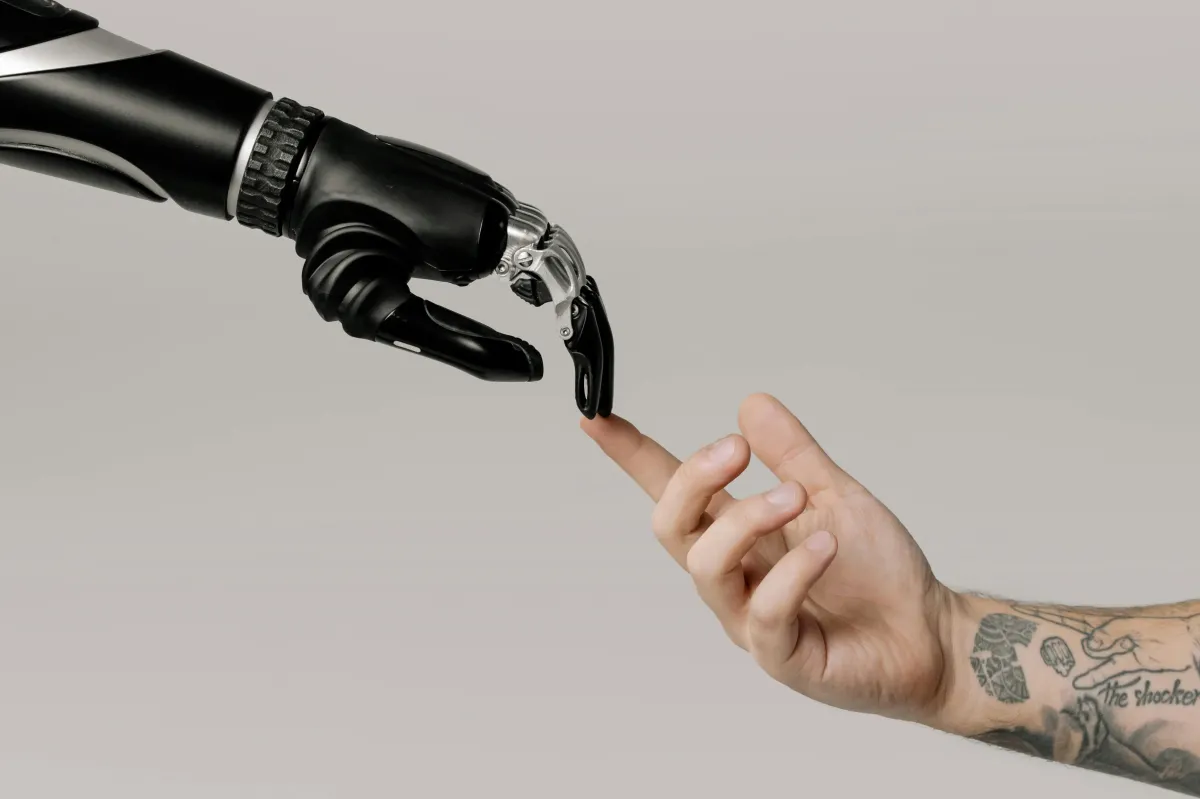
How AI tools will help business growth in 2026: The ultimate guide for smart business owners
Imagine having a super-smart helper who never gets tired, works 24/7, and helps your business earn more. This is exactly what AI (Artificial Intelligence) tools are doing for businesses in 2025. These amazing computer programs are like the smartest employee who can perform multiple tasks at once.
In 2026, AI tools will be so good that they will help businesses grow faster than ever before. Think of AI as a magical toolbox filled with different tools that can solve various problems in your business. Whether you run a small coffee shop or a large company, AI tools can help you succeed.

What are AI tools? (Explained in a simple way)
AI tools are computer programs that can think and learn like humans, but much faster. Just like a calculator helps you with math, AI tools help businesses with many different tasks.
In simple terms, here's how AI works:
•Learning: All devices perceive a lot of information and learn patterns (like how a child learns to recognize animals)
•Thinking: they use what they learn to solve problems
•Acting: They help businesses make decisions and perform tasks automatically
Top 10 ways AI tools will help businesses grow in 2025
1. Delighting customers with AI chatbots
AI chatbots are like friendly robots that talk to your customers online. They can:
•Answer questions promptly (even at 3 a.m.!)
•Help customers find what they need
•Solve simple problems without waiting
•Make customers feel important and cared for
Real example: A pizza shop uses AI
A chatbot that takes orders, suggests toppings, and tells customers when their pizza will be ready. Customers love this quick service!
2. Smart marketing that actually works
AI tools help businesses find the right customers and show them the right products. It's like a crystal ball that tells you:
•Who will buy your products
•When they're most likely to buy
•What messages will convince them
•How much to spend on advertising
How it helps in growing the business:
Instead of wasting money on ads that don’t work, businesses can focus on customers who really want their products.
3. Super-fast data analysis
AI tools can sift through a lot of information in just a few seconds. They help businesses:
•Understand what customers really want
•Detect problems before they become big problems
•Find new opportunities to make money
•Make smart decisions based on real facts
Simple comparison: If it takes a human 10 hours to analyze sales data, AI can do it in 10 minutes!
4. Automate boring tasks
All devices can perform repetitive, boring tasks so humans can focus on more important tasks. These include:
•sorting emails
•create report
•Manage Schedule
•Processing Order
•handle paperwork
Business benefits: When employees don’t have to do boring tasks, they can spend their time on creative work, which earns them more money.
5. Predicting the future (sort of!)
AI tools are amazing at predicting what might happen next. They help businesses:
•Know how much inventory to order
•Predict which products will be popular
•Understand market trends
•Plan for busy and slow seasons
6. Creating content very fast
AI writing tools help businesses create the following:
•Blog posts and articles
•social media post
•Product Details
•email newsletters
•website content
Time savings: What used to take hours to complete now takes minutes, and the content is often much better!
7. Manage money better
Al financial instruments help businesses:
•Track expenses automatically
•Find Ways to Save Money
•Detect fraud before it does harm
•Make better investment decisions
•Plan your budget more accurately
8. Improvement of products and services
AI helps businesses improve their products by:
•Analyzing Customer Feedback
•Finding defects in products
•Testing new ideas quickly
•Personalizing services for each customer
•improve quality control
9. Hire the right people
Al recruiting tools help businesses:
•Find the best job candidates
•The screen reboots quickly
•Schedule interviews automatically
•Predict which employees will be successful
•Reduce hiring mistakes
10. Better supply chain management
AI helps businesses manage their supply chains:
•Tracking shipments in real time
•Optimization of delivery routes
•predicting delays
•managing warehouse inventory
•reducing transportation costs
The biggest AI trends for business growth in 2026
AI Agent: Your Digital Employee
By 2025, AI agents will become like digital employees who can handle complex tasks. These smart helpers:
•Manage entire workflow
•decide independently
•Coordinate between different departments
•Handle customer service from start to finish
Multimodal AI: Understanding it all
Newer Al tools can understand:
•Text (such as emails and reports
•Images (such as photos and charts)
•Voice (like phone calls and meetings)
•Videos (such as training materials and presentations)
This means that one AI tool can help with many different types of tasks.
Advanced reasoning: Better decisions
All devices in 2025 will be better in the following ways:
•solving complex problems
•understanding the context
•make logical connections
•Providing better recommendations
Industry-specific AI applications
Retail and e-commerce
•Personalized shopping experience: AI shows each customer the products they would most like to buy
•Inventory optimization: AI predicts which products to stock when
•Price Optimization: AI determines the best price to maximize profits
•Visual search: Customers can find products by uploading photos
Health care and medicine
•Patient scheduling: AI optimizes appointment scheduling
•Medical diagnosis assistance: AI helps doctors identify health problems
•Drug discovery: AI speeds up the development of new drugs
•Administrative tasks: AI handles
insurance claims and paperwork
production
Predictive maintenance: AI predicts when machines will need repairs
•Quality control: AI detects defects in products
•Production optimization: AI improves
•manufacturing efficiency
•Supply chain management: AI coordinates suppliers and deliveries
financial Services
•Fraud detection: AI instantly detects suspicious transactions
•Risk assessment: AI evaluates loan applications
•Algorithmic trading: AI makes investment decisions
•Customer service: AI chatbots handle banking queries
Education
•Personalized learning: AI customizes lessons to each student’s needs
•Automated Grading: AI Grades Tests
and assignments
•Student support: AI tutors help students learn
•Administrative efficiency: AI takes over
Enrollment and Scheduling
Measuring AI success: Key performance indicators (KPIs)
To know if AI tools are helping your business grow, keep an eye on these important numbers:
financial metrics
•Revenue growth: How much more money are you making?
•Cost Reduction: How Much Money Are You Saving
•Return on investment (ROI): How much benefit do you get from AI spending?
•Customer lifetime value: how much each customer is worth over time
operational metrics
•Time to complete the task: how quickly the task is completed
•Error reduction: how few mistakes are made
•Employee Productivity: How much more can employees accomplish?
•Customer response time: how quickly you help customers
customer metrics
•Customer satisfaction score: How happy are customers
•Net Promoter Score (NPS): How likely are customers to recommend you?
•Customer retention rate: How many customers keep buying from you
Challenges and Solutions
Common AI Implementation Challenges
Challenge 1: Cost and budget concerns
Solution: Start with free or low-cost AI tools and upgrade slowly
Tip: Avoid investing in expensive AI systems
Calculate ROI first
Challenge 2: Employee Resistance
Solution: Provide training and show how AI makes jobs easier, not replaces them
Tip: Involve employees in the selection and implementation of AI
Challenge 3: Data quality issues
Solution: Cleanse and organize existing data before implementing AI
Tip: Invest in data management systems and processes
Future outlook: What’s next for Al in business?
Expected development by 2026-2030
More intelligent AI assistant
•AI will get even better at understanding human language and intentions
•Virtual assistants will handle more complex business tasks
•AI will work more seamlessly with existing business software
Industry-specific AI solutions
•Custom AI tools designed for specific industries will become common
•Small businesses will get access to enterprise-level AI capabilities
•AI will become more affordable and easier to use
Advanced Automation
•Entire business processes will be automated from start to finish
•AI will automatically coordinate between different business systems
•Human monitoring will focus on strategy rather than day-to-day operations
better integration
•AI tools will work together more smoothly
•A single platform will provide multiple AI capabilities
•Businesses will have unified AI dashboards for all operations
Getting Started: Your AI Implementation Roadmap
Phase 1: Assessment and Planning (Weeks 1-2)
1. Identify pain points: List your biggest business challenges
2. Set goals: Decide what you want to achieve with AI
3. Budget planning: Determine how much you can invest
4. Team preparation: Identify who will manage the AI implementation
Step 2: Equipment Selection (Weeks 3-4)
1. Research options: Compare different AI tools
2. Free Trial: Try the tool before you buy
3. Check compatibility: make sure the tools work with existing systems
4. Read reviews: Learn from the experiences of other businesses
Frequently Asked Questions (FAQS)
1. How much will it cost to implement AI tools for small businesses in 2026?
Answer: The cost of AI varies greatly depending on your needs. Small businesses can start with a free tool like ChatGPT for basic tasks or spend $10-50 per month on a specialized AI tool. For comprehensive AI solutions, expect to invest $100-500 per month. The good news is that most AI tools now offer free trials, so you can test them out before committing. Many small businesses see positive returns within 3-6 months of implementation.
2. Will AI tools replace human employees in my business?
Answer: No, AI tools are designed to help employees, not replace them. Think of AI as a super-powered assistant that handles boring, repetitive tasks so your employees can focus on creative, strategic tasks that require human thinking. In 2026, successful businesses will use AI to make their human employees more productive and valuable, not eliminate jobs. The important thing is to train your team to work effectively with AI tools.
3. What are the best AI tools for beginners who know nothing about technology?
Answer: Start with these user-friendly AI tools that require no technical skills: ChatGPT or Claude for writing and customer service, Canva AI for creating graphics and marketing materials, Grammarly for improving written communications, Calendly AI for scheduling, and Mailchimp AI for email marketing. These tools have simple interfaces and helpful tutorials to help you get started quickly.
4. How can I measure that AI tools are actually helping my business grow?
Answer: Track these simple indicators before and after implementing AI: revenue growth (are you making more money?), time savings (how many hours do you save per week?), customer satisfaction (are customers happier?), cost reduction (are you spending less on certain tasks?), and employee productivity (can your team get more done?). Most AI tools also provide built-in analytics to show their impact on your business performance.
5. Will my business data be safe when using AI tools in 2026?
Answer: Reputable AI tools in 2025 will adhere to strict security standards to protect your data. Look for AI providers that offer data encryption, privacy certifications (such as SOC 2 or ISO 27001), GDPR compliance, and clear privacy policies. Always read the terms of service, choose established companies with a good reputation, and avoid uploading sensitive information to free or unknown AI tools. Many AI tools now offer enterprise versions with advanced security features specifically for businesses.
Conclusion: Your AI-Powered Future Starts Now
AI tools in 2026 won’t be just fancy gadgets, they will be essential business tools that can help any company grow faster, serve customers better, and make more money.
The best part? You don’t need to be a tech whiz to use them.
Businesses that start using AI tools now will have a huge advantage over those that wait. AI adoption is moving quickly, and by 2026 there will be significant advances in quality, accuracy, efficiency, and automation that will continue to work in concert with one another. With 66% of CEOs reporting measurable business benefits from generative AI initiatives, particularly in increasing operational efficiency and customer satisfaction, it’s clear that AI is delivering real results. Remember, you don't have to implement everything at once. Start with an AI tool that solves your biggest problem, learn how to use it properly, and then gradually add more tools as you become more comfortable. It's important to start your AI journey today, because the longer you wait, the further ahead your competitors will get.
The future of your business is bright, with AI tools helping you succeed. The question isn’t whether you should use AI or not, but which AI tools you should start with first. Take the first step today and watch your business grow in ways you never imagined.